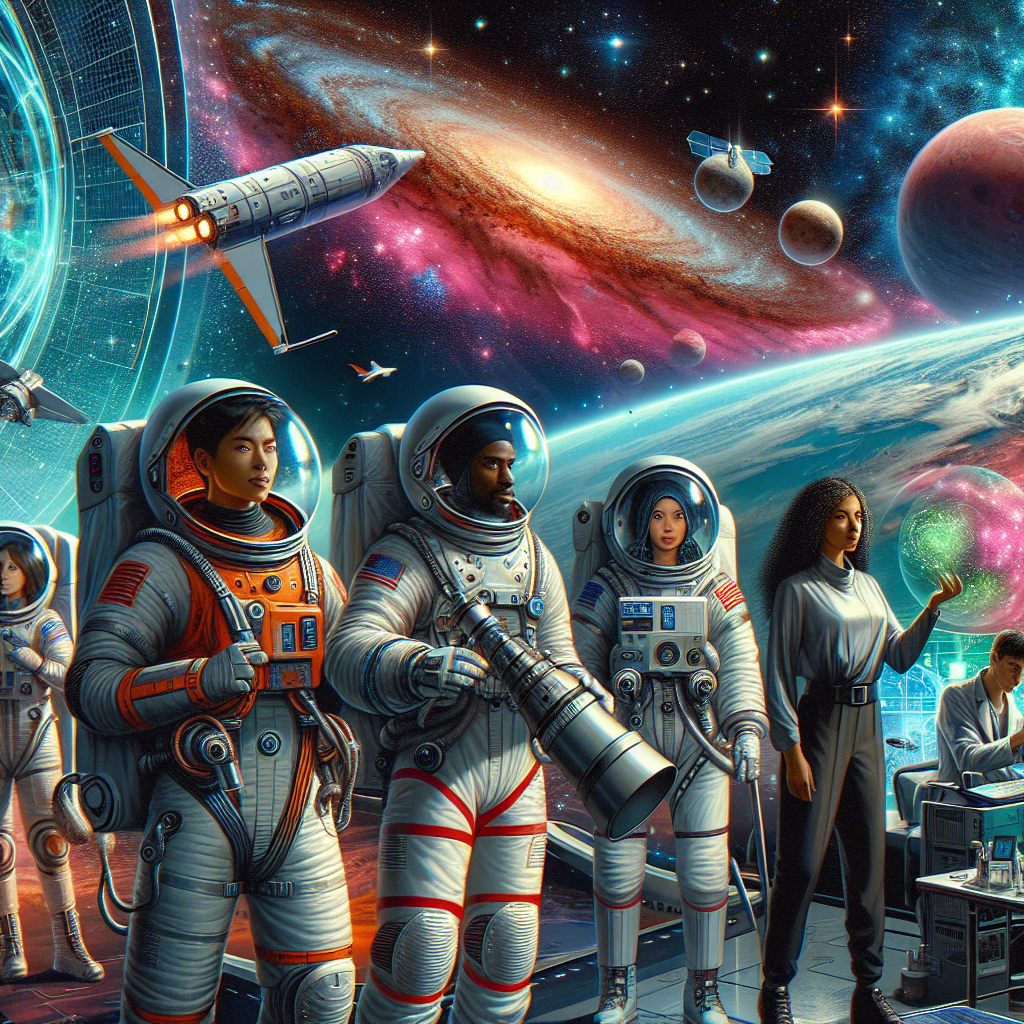
Space tourism is transitioning from science fiction to a burgeoning reality, reshaping our collective imagination about the final frontier. After decades of anticipation, the 2020s witnessed the first commercially available suborbital trips for private citizens. With technological advancements and a growing ecosystem of public and private investment, space tourism is on the cusp of a new era.
The next decade will likely see space travel become increasingly accessible. Currently, a seat on a spaceflight is expensive, available only to millionaires and celebrities. However, as was the case with commercial air travel, costs are expected to drop as technology improves and more companies enter the market. A combination of reusable rockets, more efficient spacecraft, and broader launch infrastructure will drive prices lower, putting space within reach for a wider demographic.
In the near future, suborbital trips will become more routine, offering a few exhilarating minutes of weightlessness and breathtaking views of Earth from above the Kármán line. Companies like Blue Origin and Virgin Galactic are already refining this experience. As safety continues to improve and public enthusiasm grows, these short adventures could be offered with the frequency and reliability of cruise trips or luxury safaris today.
Beyond suborbital tourism, orbital adventures are poised to expand. Private space stations, currently in conceptual or early prototype stages, are set to replace the International Space Station within the next two decades. These commercial outposts will cater to researchers, industry, and tourists alike. Overnight stays in orbit, with panoramic views of our planet and the cosmos, could become a prize experience for the affluent, and over time, increasingly for the broader public.
Several secondary industries will emerge around space tourism, including astronaut training camps, medical screening services, custom space suits, and zero-gravity entertainment. The need for advanced life support, food preparation, and leisure options will spur innovation and create new markets. Technology developed for these ventures will find applications back on Earth, further integrating space exploration with everyday life.
The environmental impact of space tourism must be navigated carefully. While launches currently produce significant emissions, the pressure to innovate greener propulsion technologies will intensify as launch frequencies increase. Companies are already investing in research and development of sustainable fuels, reusable launch vehicles, and efficient ground operations. The challenge of balancing environmental responsibility and industry growth will drive advances benefiting both space and Earth ecosystems.
Ultimately, space tourism offers more than just adventure. It has the potential to inspire a new generation of innovators, scientists, and explorers, shifting our perspective of Earth as a fragile and interconnected system. The long-term human presence in space may one day catalyze advancements in medicine, materials science, and even planetary stewardship. As the boundaries of tourism expand beyond our atmosphere, the possibilities for human progress, collaboration, and wonder multiply, shaping a future where the extraordinary becomes possible for all.