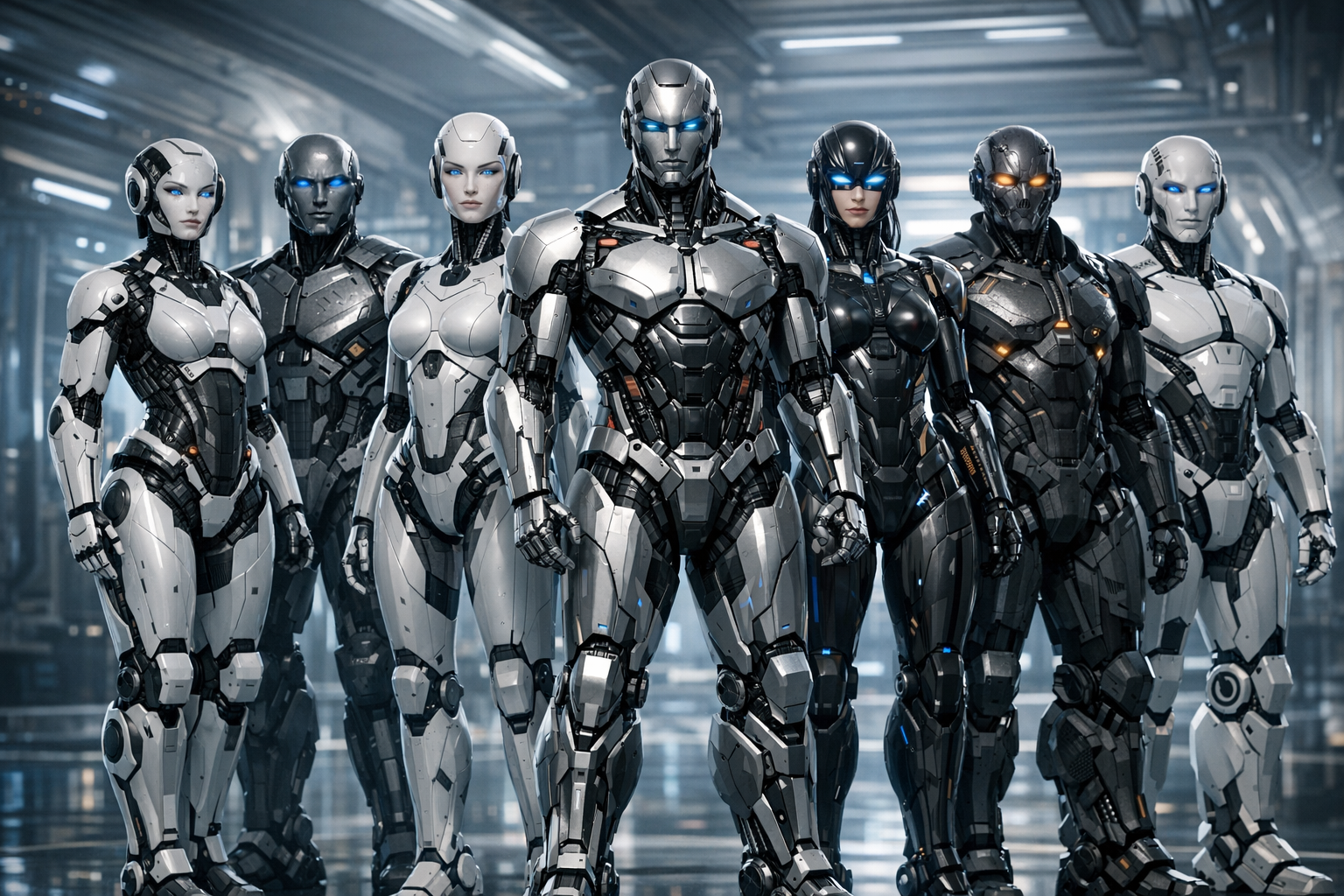
Humanoid robots are moving from science fiction into daily life, and the most important story is not replacement but expansion. In the coming decades, these machines are likely to become practical partners in industries that need mobility, dexterity, and human-centered interaction. Unlike fixed industrial robots, humanoid systems are designed to work in spaces already built for people: homes, hospitals, schools, warehouses, offices, and public infrastructure. That design choice matters. It means the future of robotics may arrive not through rebuilding the world around machines, but by creating machines that can adapt to the world humans already use.
The most promising future for humanoid robots lies in solving labor gaps, especially in physically demanding, repetitive, or hazardous work. Aging populations, shrinking workforces, and rising care needs are creating pressure across many economies. Humanoid robots could help lift patients in elder care settings, deliver supplies in hospitals, assist with disaster response, support construction tasks, and handle routine warehouse movement. In each case, the value is not simply lower cost. It is resilience. A society with robotic support can maintain services more reliably during labor shortages, emergencies, and demographic change.
In the home, humanoid robots could become a major force for independence and dignity. For older adults and people with disabilities, a capable household robot could help with mobility, meal preparation, cleaning, medication reminders, and emergency alerts. That changes the meaning of independent living. Families may be able to keep loved ones safe at home longer, while caregivers gain relief from constant strain. If designed well, these systems will not feel like cold appliances. They will function as responsive tools that understand routines, adapt to preferences, and support everyday life in practical, respectful ways.
Education and human development may also benefit. Humanoid robots can provide personalized tutoring, language practice, technical training, and hands-on demonstration in classrooms and vocational settings. Their physical form allows them to point, show, manipulate objects, and guide activities in a way that screens alone cannot. In the future, they may help scale high-quality learning support to communities that lack enough teachers or specialists. They could also create more inclusive environments for students who benefit from repetition, patience, and multimodal instruction. The result would not be less human teaching, but more support around it.
The long-term economic impact could be profound. Humanoid robots may become a general-purpose labor platform, much like computers became a general-purpose information platform. Once the hardware becomes affordable and the software becomes reliable, entirely new services, businesses, and professions will emerge. Robot maintenance, behavior design, safety oversight, human-robot workflow management, and embodied AI training could become major employment categories. History suggests that transformative technologies often eliminate some roles while creating many others, and humanoid robotics is likely to follow that pattern. The most successful societies will be the ones that prepare workers to collaborate with intelligent machines rather than compete with them blindly.
Trust will determine the pace of adoption. For humanoid robots to succeed, they must be safe, transparent, and socially intelligible. People need to know what a robot is doing, why it is doing it, and how to override or correct it. Privacy will be essential, especially for robots operating in homes, workplaces, and care environments. Good design will matter as much as technical capability. The best humanoid robots of the future may not be those that appear most human, but those that behave most usefully, predictably, and ethically. In that sense, the future of humanoid robotics is not only an engineering challenge but a civic one.
A positive futurist perspective sees humanoid robots as an opportunity to build a more capable and humane society. If developed responsibly, they can reduce drudgery, extend care, improve safety, and unlock human time for creativity, relationships, and higher-value work. They can help societies adapt to demographic and economic stress without surrendering human dignity. The future of humanoid robots should not be framed as a contest between humans and machines. It should be understood as a new chapter in augmentation, where technology takes on more of the burden so people can focus more fully on what only people can do best.