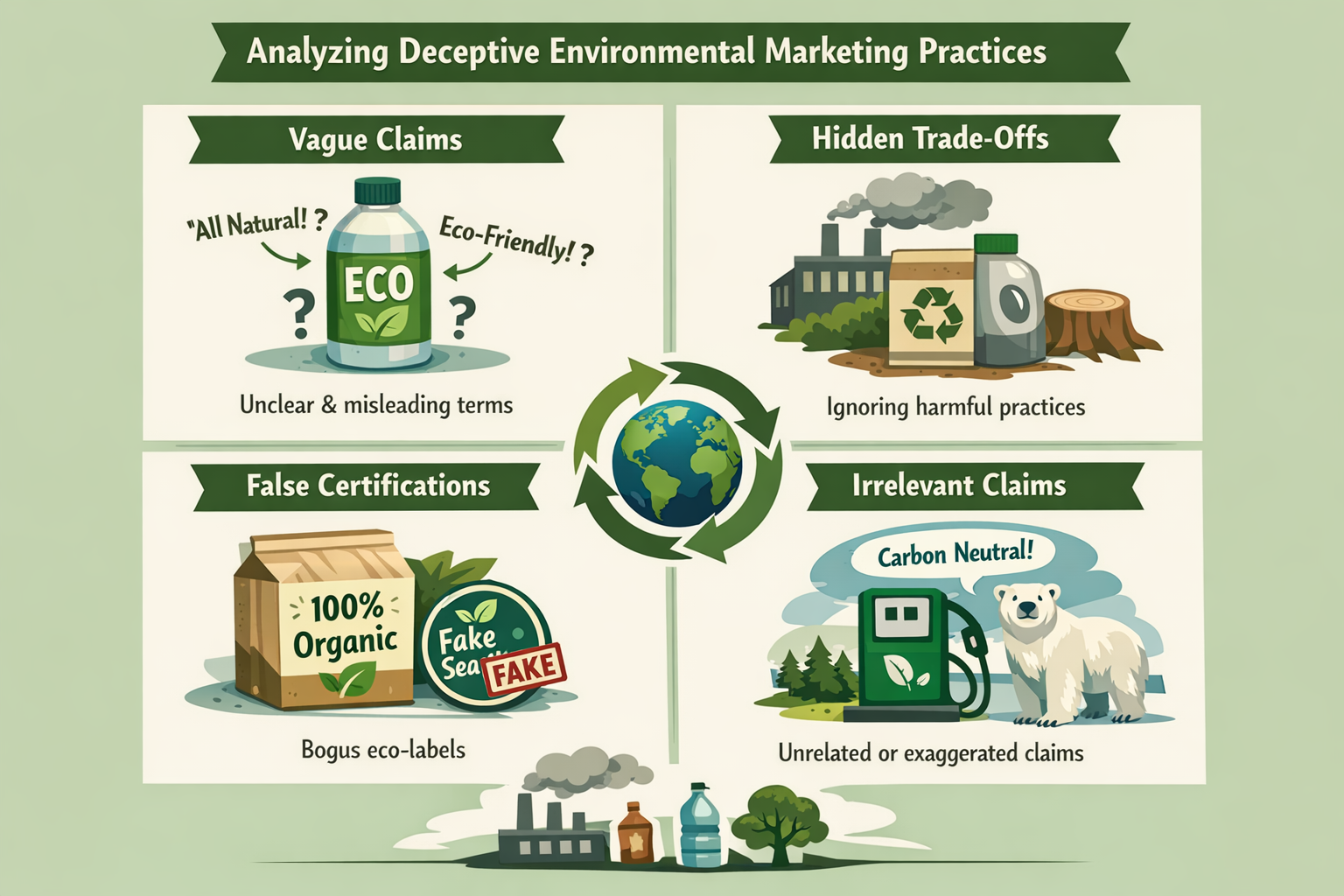
As environmental awareness becomes a stronger force in consumer behavior, the future of analyzing deceptive environmental marketing practices will become increasingly important to markets, regulators, and the public. Companies have learned that sustainability claims can influence purchasing decisions, strengthen brand loyalty, and attract investment. This has also created an environment where vague, exaggerated, or misleading claims can thrive. The next phase of environmental accountability will be defined by better tools, clearer standards, and a more informed public that expects evidence rather than slogans.
A major shift will come from advances in data analysis and artificial intelligence. In the future, deceptive environmental marketing will be easier to detect because analysts, watchdog groups, and regulators will be able to compare corporate claims against supply chain data, emissions disclosures, product composition records, and lifecycle assessments at scale. Instead of relying only on manual review of advertisements or packaging, automated systems will identify suspicious patterns, unsupported language, and inconsistencies between stated commitments and operational reality. This will make greenwashing more visible and far more difficult to sustain over time.
Regulation will also grow more precise and enforceable. Many environmental claims today rely on broad terms such as “eco-friendly,” “green,” or “sustainable,” often without measurable definitions. The future will bring stronger legal frameworks that require companies to substantiate claims with transparent, verifiable evidence. Governments and international bodies are likely to develop common reporting standards that reduce ambiguity and improve comparability across industries. As a result, environmental marketing will move away from impression-based messaging and toward quantifiable performance indicators that consumers and investigators can actually test.
Consumers themselves will become a more powerful force in exposing deception. Digital literacy is expanding, and public access to product data will continue to improve. In the future, buyers may use apps, browser tools, or smart labels to instantly review whether a company’s environmental claims are backed by trusted audits, third-party certifications, and measurable outcomes. This shift will not just protect consumers from manipulation. It will reward businesses that invest in real sustainability improvements rather than surface-level branding. Trust will become a competitive advantage built on proof.
The investment community will also play an important role in this transformation. Financial institutions are under growing pressure to distinguish between genuine environmental performance and strategic image management. As climate risk analysis matures, investors will rely on more rigorous methods to examine whether corporate sustainability narratives align with actual emissions, resource use, and transition planning. This will reduce the value of deceptive marketing in capital markets and encourage firms to treat environmental integrity as a core business discipline rather than a public relations exercise.
Looking ahead, the future of analyzing deceptive environmental marketing practices is not defined by cynicism but by progress. Better measurement, stronger oversight, and wider public scrutiny will create conditions where honesty is easier to recognize and harder to fake. That change will benefit consumers, improve market fairness, and support businesses that are genuinely committed to environmental responsibility. In a more transparent future, sustainability will no longer be judged by how persuasive a message sounds, but by how well it stands up to evidence.