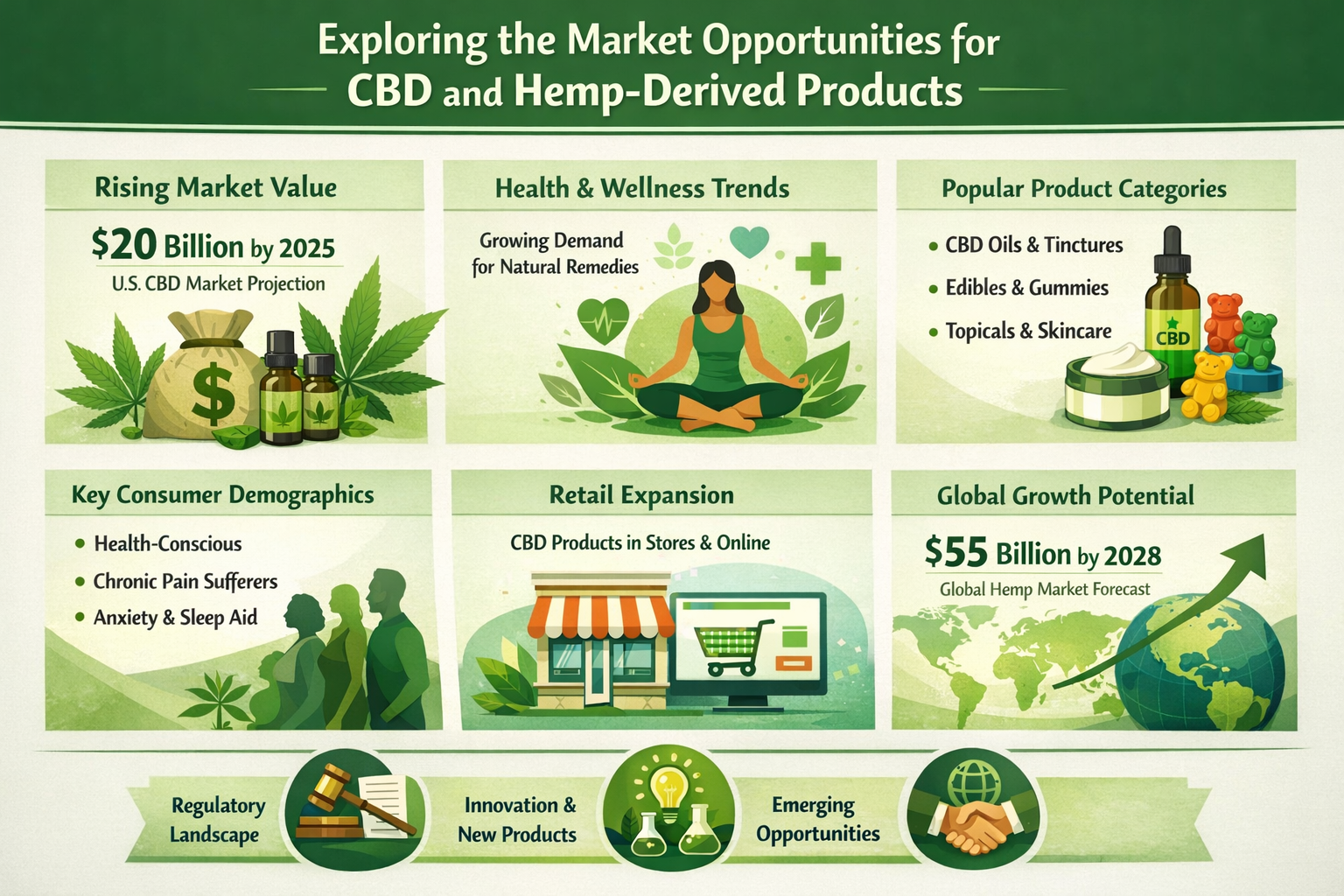
The future of CBD and hemp-derived products is moving beyond novelty and into strategic relevance across health, wellness, materials, food, and consumer goods. What began as a niche category tied to supplements and lifestyle branding is becoming a broader industrial and scientific market. As regulations mature and consumer understanding improves, hemp is positioned as one of the most versatile crops in the emerging bio-based economy. The market opportunity is no longer limited to tinctures and topical creams. It now includes functional ingredients, sustainable textiles, construction inputs, pet wellness, personal care, and advanced plant-based compounds tailored for specific consumer needs.
One of the strongest growth drivers is the shift toward plant-based wellness products with more defined use cases. Consumers are becoming more selective and informed. They want products that are consistent, tested, and designed for specific outcomes such as recovery, sleep support, stress management, skin health, or daily balance. This creates room for premium brands that invest in formulation science, transparent sourcing, and measurable quality standards. In the future, the most successful CBD businesses will likely be those that combine agricultural expertise with pharmaceutical-grade manufacturing discipline and data-backed claims.
A second major opportunity lies in product diversification across hemp’s full value chain. Hemp-derived cannabinoids may remain the most visible segment, but the broader hemp market may ultimately generate even more durable value. Hemp fiber can support sustainable textiles, biodegradable packaging, automotive composites, insulation, and low-carbon building materials. Hemp seed offers nutritional applications in protein powders, oils, snacks, and functional foods. As climate pressure and supply chain instability push industries to seek renewable raw materials, hemp becomes attractive not only as a consumer product ingredient but also as a strategic industrial resource. This expands the market from retail shelves into manufacturing systems.
Regulatory clarity will be one of the most important catalysts for long-term growth. In many markets, uncertainty has constrained investment, innovation, and large-scale retail participation. As governments establish clearer frameworks for testing, labeling, dosage, safety, and permissible claims, institutional capital will become more confident. This will likely accelerate mergers, partnerships, and market standardization. Companies that prepare now by building compliance-first operations will be best positioned when regulation catches up with demand. In the future, trust will be a competitive asset, and trust will be built through certification, traceability, and rigorous quality assurance.
Global expansion also presents a significant opening. Different regions are approaching hemp and CBD from different angles, including wellness, agriculture, sustainability, and export development. Countries with favorable climates, lower production costs, or progressive industrial hemp policies may become major suppliers in the international market. At the same time, localized brands can thrive by aligning products with regional consumer preferences and cultural attitudes toward natural health. This creates both export opportunities and differentiated domestic strategies. The winners in this space will understand that hemp is not one market, but a network of interconnected markets shaped by local regulation, consumer behavior, and infrastructure.
Technology will further transform the sector. Advances in genetics, cultivation analytics, precision extraction, and formulation chemistry will improve consistency and reduce costs. Better cannabinoid profiling and minor cannabinoid research may unlock new categories beyond CBD, creating targeted products with stronger consumer relevance. Digital traceability tools, including supply chain monitoring and smart labeling, can strengthen transparency from farm to finished product. As production becomes more efficient and science becomes more sophisticated, the sector will move away from broad claims and toward customized, evidence-oriented solutions that appeal to mainstream consumers and professional buyers alike.
The most exciting future opportunity is that CBD and hemp-derived products sit at the intersection of several powerful long-term trends: preventive wellness, sustainable agriculture, circular manufacturing, and plant-based innovation. This is not simply a fast-growing category. It is a platform for rethinking how products are grown, made, marketed, and used. Businesses that treat hemp as a serious economic and ecological asset rather than a temporary trend will be the ones that define the next phase of the market. For investors, entrepreneurs, and policymakers, the message is clear: the future of hemp is bigger than cannabis culture. It is about building resilient industries around one of the most adaptable crops of the modern era.